

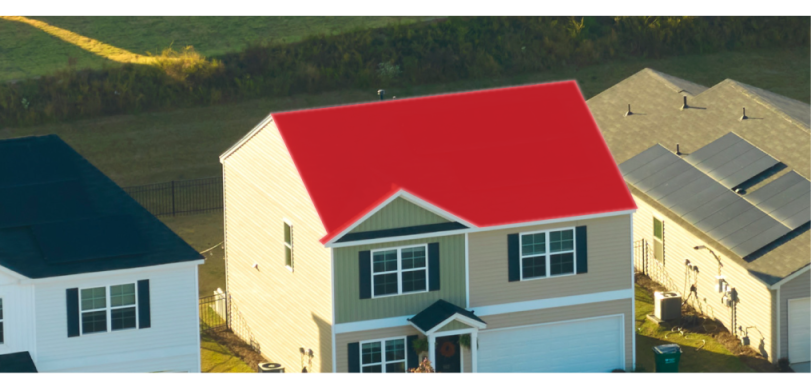
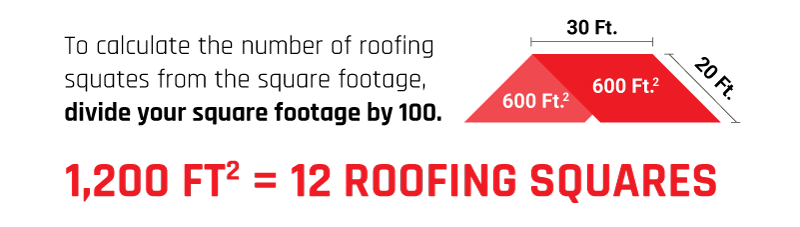
Quick definition: A roofing square equals 100 square feet of roof area. Pros use squares to estimate material, labor, and waste quickly across any roof style.
What Exactly is a Roofing Square?
In roofing, a square is a standardized unit equal to 100 sq ft of roof surface. Using squares simplifies takeoffs, pricing, and material ordering across materials like asphalt shingles, metal panels, tile, or shakes.
Because estimates, deliveries, and crew planning are often aligned to squares, understanding them keeps jobs on schedule and budgets on target.
Why Are Roofing Squares So Important?
- Consistent estimating: Bids, purchase orders, and labor plans are easier when everything rolls up to squares.
- Material accuracy: Squares help right-size shingles, underlayment, fasteners, drip edge, and accessories.
- Cost control: Fewer “oops” orders and fewer truck rolls reduce waste and protect margin.
How to Calculate Roofing Squares
Fast Method
- Measure roof area (sq ft): For each plane, multiply length × width. Add all planes.
- Convert to squares: Roof Squares = Total Sq Ft ÷ 100
Example: A 2,000 sq ft roof ÷ 100 = 20 squares.
Include Roof Pitch (Surface vs. Footprint)
Pitch increases surface area above the building footprint. Multiply by a pitch factor before converting to squares.
| Pitch | Factor |
|---|---|
| 3/12 | 1.03 |
| 4/12 | 1.06 |
| 5/12 | 1.08 |
| 6/12 | 1.12 |
| 8/12 | 1.20 |
| 10/12 | 1.30 |
| 12/12 | 1.41 |
Open Free Roof Pitch Calculator
Approximate multipliers; complex roofs may vary.
Waste Factor by Material/Complexity
Add waste to cover cuts, starter/hip/ridge, and handling:
| Scenario | Typical Waste |
|---|---|
| Simple gable, 4/12–6/12 | 7–10% |
| Hips/valleys or dormers | 10–15% |
| High complexity / tile / patterning | 12–20%+ |
Confirm with local code, manufacturer specs, and crew preference.
Prefer to skip manual math? Measurement reports provide verified squares, pitch, and linear details ready for bids and material lists.
Factors That Influence Roofing Square Calculations
- Roof Pitch: Steeper roofs have more surface area than the footprint; use the pitch factor table above.
- Complexity: Multiple planes, hips/valleys, dormers, skylights, and chimneys increase squares and waste.
- Waste: Most jobs add 7–15% waste; adjust by material and layout.
- Material Type: Tile/metal patterns and panel lengths can change waste assumptions.
Common Mistakes When Measuring Roofing Squares
- Ignoring pitch: Using the footprint without multiplying by a pitch factor underestimates materials.
- Overlooking features: Dormers, skylights, and cutlines require precise takeoff—rounding can backfire.
- Underestimating waste: Ordering too tight risks delays and extra trips; validate waste with the crew.
DIYing a project? See our DIY Roofing Guide for planning tips.
How Technology Has Revolutionized Roofing Measurements
Modern aerial and AI-assisted workflows remove guesswork. You can receive verified squares, pitch, linear footage, and annotated diagrams—ready for bids and material orders—without climbing a ladder.
Evaluating platforms? Start here: How to choose the right roofing measurement software.
Get Your Roof’s Squares—Verified
When accuracy matters, order a measurement to receive squares, pitch, and line items you can trust for bids and material lists.
Roofing Squares: Quick FAQs
How many roofing squares are in a 2,000 sq ft roof?
Divide by 100. A 2,000 sq ft surface is 20 squares. If that’s footprint area, multiply by the pitch factor first, then divide by 100.
Does roof pitch change the number of squares?
Yes. Pitch increases surface area. Multiply the footprint by the pitch factor (e.g., 6/12 ≈ 1.12) before converting to squares.
How much waste should I add?
Typical ranges are 7–15%. Simple gables trend lower; complex roofs and tile/patterned systems trend higher.
Are roofing squares the same across materials?
The unit (100 sq ft) is the same, but bundles/panels needed per square and waste vary by material and layout.
written by RoofScope published on 08. 15. 2024